
Checking for a Warrant in Talking Rock
Start any Talking Rock warrant check with the paper itself. Pull the full legal name, date of birth, citation or case number, event date, and the court named on the notice, because those details tell you which office truly holds the record. The town itself offers no online search interface, no payment form, no active warrant list, and no recall form to work with. There is no police warrant line or court calendar to call either. The exact court and agency named on your notice will guide you far better than any broad vendor search would.
- Read the citation or notice for the issuing court and case number.
- Ask Talking Rock Town Hall which office received a town-code matter.
- Call Pickens County Sheriff at 706-253-8900 for law-enforcement confirmation.
- Call the named court, including Probate or Magistrate when applicable.
- Use the Sheriff's written-records channel if direct checks remain incomplete.
When you call, ask two things. Is the warrant still active, and which judge or clerk can change it? Showing up in person could lead to custody, so phone first. If surrender or bond is likely, get legal advice before you go.
Talking Rock's Court Authority
Talking Rock's government page links an ordinance that creates a municipal court. The town charter also routes appeals: review of a municipal-court judgment by certiorari goes to the Superior Court of Pickens County under Georgia law. Those provisions establish legal authority. They do not show a live online warrant operation running today.
Quick answer: A chartered court does not guarantee a current warrant roster, public counter, or online search. Confirm today's custodian with Town Hall.
The official town government page holds the municipal-court ordinance link. It lays out the town's legal framework rather than a working warrant lookup.
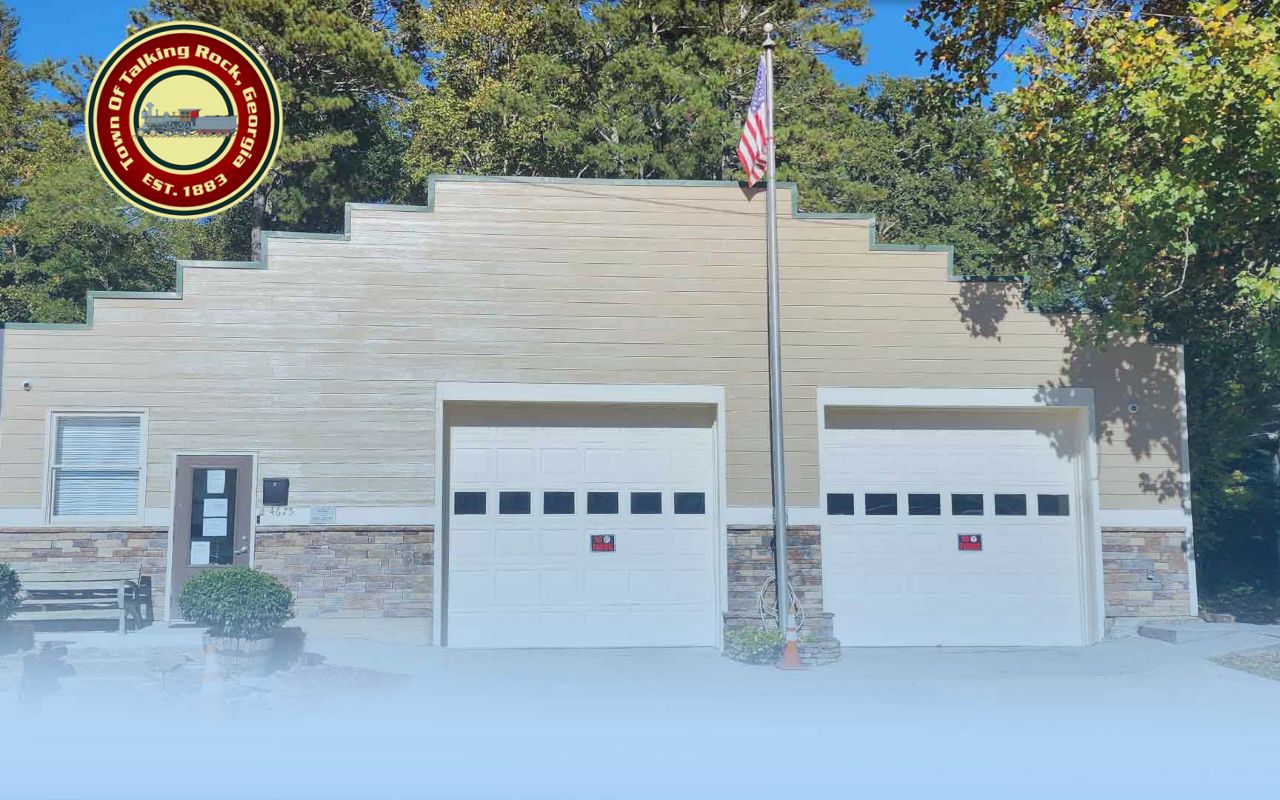
No current public judge listing, clerk, session schedule, warrant phone, or city payment portal appears anywhere. The ordinance link alone does not mean a live town warrant counter or database exists. A resident's best move is to ask Town Hall where a present-day matter was assigned, then contact that court directly. That routing step keeps an old or general government page from being mistaken for current case-status evidence.
Talking Rock Police and Municipal Court
Talking Rock has no police department page and no current city warrant counter that the county's own plans describe. The Pickens County emergency plan states that the county provides the town's law-enforcement service. Town Hall sits at 4675 Highway 136 West, Talking Rock, Georgia 30175. Staff answer 706-253-5515 and townclerk@talkingrockga.com.
Ask Town Hall which court or county office received the complaint.
Warrant confirmation
Ask the issuing court and Pickens County Sheriff to confirm the official status.
Town Hall is the only public city contact out there. It routes calls; it is not a warrant database. The absence of a town police page matches the county's published shared-service model.
Talking Rock Warrants Need a Custodian
A written request only works when it lands in the office that keeps the record. For Pickens County law-enforcement material, the Sheriff's Office directs requesters to its official NextRequest portal, and county instructions require that requests be in writing. Expect a response, a cost estimate, or a timing explanation within three business days. If the item you want is a Talking Rock administrative record, Town Hall may hold it; for a town-code complaint, ask where the file was sent. A criminal warrant request belongs with the issuing court or law-enforcement agency. The Georgia Open Records Act does not turn Town Hall into a clearinghouse for every Pickens court.
A narrow request naming the event, court, date range, and case number is easier to route than a request for every Talking Rock warrant.
Talking Rock Warrant Types
The type tells you which office to call. Skip a court date in Talking Rock and a bench warrant may follow. An arrest warrant grows out of a probable-cause complaint or an open investigation. Traffic cases can add a Georgia failure-to-appear report plus a separate driver's-license consequence. Search warrants target places and things, so they rarely answer whether a person is wanted.
| Warrant Type | How It Arises | Who Issues It |
|---|---|---|
| Traffic warrant | Missed traffic date or unresolved citation | Court shown on the citation |
| Ordinance warrant | Missed or unresolved city-code case | Court assigned the city matter |
| Bench warrant | Failure to appear or obey a court order | Court handling the case |
| Arrest warrant | Probable cause for a criminal offense | Qualified Georgia judicial officer |
Talking Rock courts use no separate capias-pro-fine label. Follow the exact term the issuing court gives rather than borrowing language from another state.
Talking Rock Traffic Warrant Routing
A traffic warrant question in Talking Rock starts with the ticket itself. If the matter sits with Pickens County Probate Court, call 706-253-8755. The court links to EZCourtPay, which accepts a citation number paired with a date of birth, or a last name. Treat that vendor as a citation and payment path only, not a full warrant database. Georgia Courts itself warns that no central citation database exists statewide. Miss a date? Call the court directly and ask what it wants: a new setting, payment, proof, a plea, or an appearance. A failure-to-appear notice sent to Georgia DDS can trigger a license suspension after notice. Clearing the DDS problem and resolving the court case are two separate jobs, even though they are connected.
Inside a Talking Rock Warrant Record
Talking Rock publishes no sample warrant roster. Even so, an issuing court or the sheriff matches people through standard identity and case fields, so ask the office to walk you through the record and say when its status was last checked. A cause or warrant number like COURT-CASE-ID has to come straight from the source record. Never guess it from a vendor response.
| Warrant or cause number | The court's identifier for the warrant or underlying case |
|---|---|
| Subject name and DOB | Identity fields used to avoid a same-name mismatch |
| Charge or offense | The alleged offense or missed-court basis |
| Issuing court | The office with power to recall or update the warrant |
| Bond or conditions | Terms set by the court, if release is authorized |
| Status and dates | Issue, service, recall, or other recorded status events |
Talking Rock Town Hall Source
The official Talking Rock site lists the Town Hall address, some history, and a contact route. It offers no public warrant search. Use it as the town's genuine public entry point.

Town Hall can point you toward the office handling a local matter. Treat it as a town office, though, not a police warrant desk or a live court warrant counter.
How Talking Rock Warrants Fit the County System
In a Pickens County matter, the issuing court owns the case, while the Pickens County Sheriff confirms and serves law-enforcement warrants. Magistrate Court takes many warrant applications. Probate Court handles county traffic, and Superior Court handles felonies. For records, the Clerk of Superior Court answers at 706-253-8763.
Warrant flow: Talking Rock matter › assigned Pickens court › Pickens County Sheriff › court status and Georgia law-enforcement systems
The state does not offer the public one statewide warrant search. The broader Pickens County warrant records overview explains the county route, while Talking Rock Town Hall can help identify the first office for a town matter.
When Talking Rock Warrants Stay Hidden
A blank web result is not a clearance letter. Talking Rock posts no public roster at all. A warrant can be new, sealed, unserved, tied to an open investigation, filed under another spelling, or sitting only with the issuing court. Juvenile law-enforcement records generally stay closed to the public.
Not found: The searched source returned no match. It does not prove no warrant exists.
Recalled: The issuing court withdrew the warrant. Confirm that the official system reflects the change.
Served: Officers executed the warrant. The underlying case can still remain open.
When the risk is real, check two official sources on a Talking Rock warrant: the issuing court and the sheriff or police agency that serves it.
Resolving a Talking Rock Warrant
Start by confirming the warrant type, the court, the case number, its active status, and any bond or fee. Ask which office can recall or update it. Payment alone rarely clears a bench warrant; a judge may demand a new appearance, a plea, proof, or a written order. If surrender is required, ask where to report: the sheriff, the detention center, or the issuing court. Bring questions about identification, booking, magistration, and bond. Pickens County permits cash, professional, and property bonds in fitting cases, and the jail guidance lists a $20 processing fee. Bond secures release under conditions. It does not dismiss the case. Keep every receipt and release order, then call the court and the sheriff again to confirm the Talking Rock warrant status was updated.
Talking Rock Warrant Records and Public Access
Georgia law leans toward open records, yet not every warrant detail is public on demand. Send a focused request to the office that actually holds the record. Pickens County charges $0.10 per page for copies, and search or retrieval time may be billed after the first fifteen minutes. The agency may cite a lawful exemption rather than release protected material. Talking Rock requests follow the same rules.
Key Rules:
Georgia Open Records Act, O.C.G.A. § 50-18-71 sets the request, response, timing, and fee framework.
O.C.G.A. § 50-18-72 allows specific law-enforcement and pending-investigation material to be withheld.
O.C.G.A. § 15-11-708 generally keeps juvenile law-enforcement records from public inspection.
Use warrant records only to understand and resolve the legal process. Before acting, confirm any result with the issuing court or the responsible sheriff for a Talking Rock warrant.